Biomarkers for neurodegenerative diseases
Many new treatments are in development for neurodegenerative diseases. CHDR is developing and validating biomarkers to reliably measure their effects at an early stage of clinical drug development.
‘Drug developers in the biotech and pharmaceutical industry show much interest in the methods we are developing in the field of neurodegenerative diseases,’ says Dr Philip Kremer, Research Director Neurology. 'There are many exciting developments geared towards compounds that aim to modulate the course of disease in patients with neurodegenerative diseases. Which is very much needed. There is a growing group of patients with disorders such as Parkinson's disease, ALS, and various forms of dementia. We are happy to contribute to the development of safe and effective therapies that can favourably influence the course of these neurodegenerative diseases.'
Most drugs now in development inhibit one of the underlying processes of neurodegeneration, such as neuroinflammation, impaired mitochondrial function, aberrant lysosomal function, or an increased permeability of the blood-brain barrier. Kremer: ‘As neurologists, we are used to base our diagnosis on clinical features and symptoms. But from the perspective of possible treatments, it may be interesting to differentiate between subgroups in whom one of these processes predominates. The idea is that there are patients with Parkinson's disease, for example, in whom neuroinflammation seems to be the primary driver of neurodegeneration, and others in whom mitochondrial dysfunction plays a larger role. These subgroups probably will benefit from different therapeutic approaches.' The Neurology group is currently developing biomarkers for the processes underlying neurodegeneration, in collaboration with the Immunology group of Dr Matthijs Moerland and the Radiology Department at Leiden University Medical Center.
Neuroinflammation
Inflammation plays an important role in various neurodegenerative diseases, and various compounds are being developed that aim to inhibit neuroinflammation. Finding suitable biomarkers for neuroinflammation is therefore very relevant, but it proves to be challenging. Kremer: ‘The brain is a separate compartment, and peripheral measurements are not sufficiently informative about the degree of inflammation in the central nervous system.’
Using Translocator Protein Positron Emission Tomography (TSPO-PET) scans, a clear neuroinflammatory response has been demonstrated following a systemic LPS challenge, in which bacterial lipopolysaccharides (LPS) are administered intravenously to healthy study participants. CHDR has vast experience with the LPS challenge in the study of immunomodulatory compounds for systemic diseases. Kremer: ‘We will investigate to what extent the LPS-challenge shows measurable effects in the cerebrospinal fluid. If so, we have a challenge model for neuroinflammation in healthy participants, with which we may be able to provide relevant pharmacodynamic information about investigational compounds. The multiple cerebrospinal fluid samples that we will collect in this study at different moments after administration are also valuable for sponsors interested in a specific pathway. Using the samples in our freezer, we will be able to check whether our LPS challenge could be suitable for their compound.'
Mitochondria
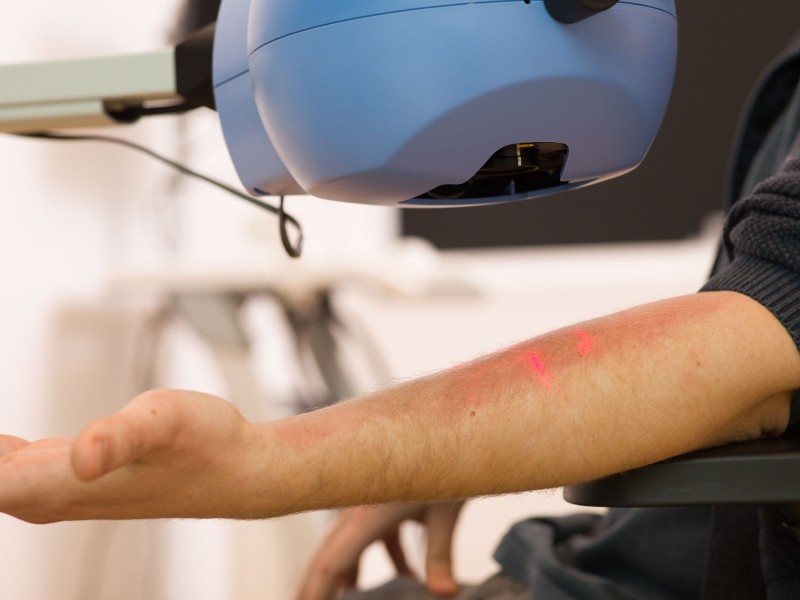
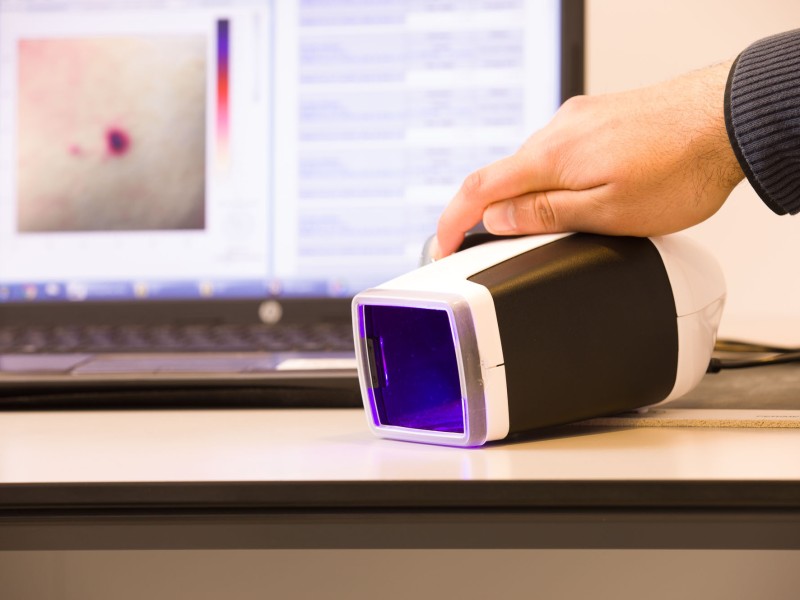
In late 2024, the Neurology Group launched a study to develop a biomarker for mitochondrial function in different groups of patients with Parkinson's disease (PD) and healthy study participants. It is well known that mitochondrial dysfunction can increase the risk of developing PD. In the study, Kremer and his colleagues are looking at mitochondrial function in the skin, in blood cells and in the brain: ‘We are working with a technique we have used before, a 31P magnetic resonance spectroscopy scan that maps the density and energy of phosphorus compounds in the brain. First, we will deplete the energy in the visual cerebral cortex using intense visual stimuli, and then we will follow the repletion of energy-rich phosphates, which reflects mitochondrial function.' In parallel, we will look at mitochondrial function in skin and blood cells using laboratory methods. By comparing patients with glucocerebrosidase mutations, early and late onset PD to healthy study participants, we hope to gain more insight into the role of mitochondria in the condition and associated subgroups. ‘We added the white blood cells and skin cells in the hope of finding useful proxy biomarkers for mitochondrial activity. But even if we have to rely on MRI scans, we would be very excited if we can measure that a compound can restore mitochondrial function.'
Lysosomal function
Lysosomes are the compartments in the cell responsible for breaking down waste products through a process known as autophagy. Dysfunction of the lysosomes and the enzymes they contain can play a pathophysiological role in PD and other neurodegenerative diseases. Without adequate autophagy, waste products, such as aggregated proteins, accumulate that are toxic to the neuron, eventually causing neurons to die. In recent years, CHDR has gained experience in investigating compounds targeting these pathophysiological pathways, in particular the lysosomal enzymes glucocerebrosidase (GCase) and leucine-rich repeat kinase-2 (LRRK-2).
For the next step, Dr Diana Pereira and her colleagues in the R&D laboratory are now analysing the process of autophagy in detail. Using cell lysates from referral white blood cells, they investigate the different stages of maturation of the autophagosome, its fusion with the lysosome and the subsequent degradation of its contents. Each of these steps can be blocked using specific substances, which reveals the pathways involved. Kremer: ‘By studying lots of parameters under many different conditions, we ultimately want to develop a validated ‘menu of intermediate lysosomal biomarkers’ for our clients. Based on the effects of their compound on the molecular pathway we may then predict what changes we should see in the peripheral blood cells of participants. This is how we want to add value in the earlier clinical development of drugs against neurodegenerative diseases that act on lysosomal functions.'
Interested in learning more?
More articles from Developing methods